There are destinations you visit, and then there are destinations that visit you — long after you’ve returned home. Angola is the latter.
Few places on the African continent carry the layered, living richness that Angola does. Here, culture is not a performance arranged for visitors. It is woven into the rhythm of daily life — in the way a woman ties her capulana at the market in Luanda, in the low thrum of semba music drifting from an open courtyard, in the warmth of a stranger who insists you share a meal before you go on your way.
A People Shaped by Many Worlds
Angola’s people are the product of one of history’s most complex crossroads. Over five centuries, Bantu kingdoms, Portuguese colonialism, and a long struggle for independence have shaped a culture that is neither defined by its wounds nor naive about them. What emerged is a people of extraordinary resilience — and extraordinary hospitality.
The Ambundu, Ovimbundu, Bakongo, and dozens of other ethnic groups each bring their own languages, ceremonies, and artistic traditions to the national tapestry. Yet there is something unmistakably Angolan that transcends these distinctions: a generosity of spirit, a love of beauty, and an instinct for celebration that visitors feel almost immediately upon arrival.
Luanda: The City That Never Whispers
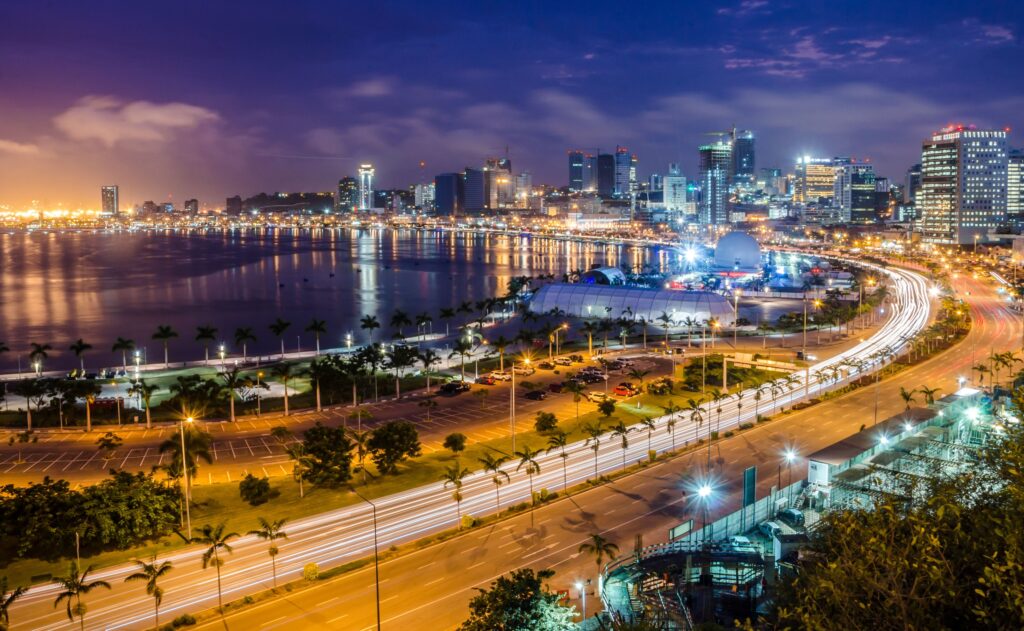
The capital is your introduction, and it announces itself boldly. Luanda is a city of contradictions held together by energy — glittering bay-front boulevards beside colonial-era facades, rooftop restaurants overlooking historic forts, live music venues where semba and kizomba fill the night with a sophistication that surprises first-time visitors.
To know Luanda is to understand that Angola has always been a place where the world converges. Its cultural life — galleries, literary festivals, fashion designers drawing on traditional textile patterns — speaks to a creative class that is asserting Angola’s place not just on the continent, but globally.
Ceremony, Art, and the Living Tradition
Beyond the capital, Angola’s cultural depth opens fully. In the south, the Himba and Mucawana peoples maintain traditions of extraordinary visual power — elaborate body adornment, ceremonial dress, and oral histories passed down through generations with meticulous care. Witnessing a traditional ceremony here is not a museum experience. It is a living encounter with a culture that has chosen, deliberately, what to preserve and what to evolve.
Angola’s artisanal heritage is equally compelling. Woven baskets from the Kwanza Sul region, bronze and iron sculptures rooted in centuries-old metallurgical traditions, and vibrant contemporary art scenes in Luanda’s growing gallery districts all reflect a people deeply invested in self-expression as a form of identity.
The Table as Common Ground
No encounter with Angolan culture is complete without its food. Muamba de galinha — a rich chicken stew fragrant with palm oil and okra — is practically a national declaration of identity. Calulu, made with dried fish and vegetables, speaks to the country’s deep relationship with both the Atlantic and the interior. Meals here are rarely rushed, rarely solitary. Food in Angola is the architecture of togetherness.
Pair it with a cold Cuca beer or a glass of ginguba — a peanut-based drink that surprises and delights — and you begin to understand that Angolan hospitality is not a custom. It is a value.
Why Angola, and Why Now
Angola remains one of Africa’s most authentically undiscovered luxury destinations — not because it lacks sophistication, but because it has not yet been overrun by the kind of mass tourism that flattens cultures into caricatures. The traveller who comes here now arrives as a guest, not a consumer.
That distinction matters. It means your encounters are real, your experiences unscripted, and your memories genuinely your own.
Angola does not ask you to fall in love with it. It simply makes falling in love inevitable.